
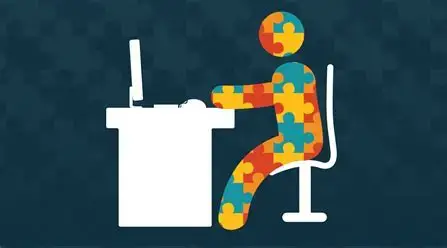
It’s no longer called Autism Awareness Month. It’s now Autism Acceptance Month. That alone says a lot about how the conversation is evolving.
Why does this matter? Because what we pay attention to shapes what becomes visible. And what becomes visible has a way of changing systems—slowly, unevenly, but meaningfully.
When I was in graduate school in the early 1990s, I didn’t encounter a single autistic client. Autism wasn’t a significant part of the curriculum; I remember a film in a language development class, and not much more.
Fast forward a decade to the early 2000s, when I was working in a clinic in Brooklyn. The picture had completely shifted. It felt like every third child coming through the door had some presentation on the autism spectrum.
Whether that change reflected increased awareness or broader diagnostic criteria is often discussed. From my perspective, it was prevalence.
But the shift wasn’t just about numbers. It changed what we were seeing day to day, and what we had to respond to. When something shows up that consistently, it stops being an exception. It becomes part of the landscape.
A Tale of Two Worlds
I’ve spent over 30 years as a speech-language pathologist and more than 20 years as a corporate communications trainer. Those two worlds—the clinic and the boardroom—don’t often get talked about in the same breath. But they should.
In the corporate space, I work with executives on skills like prioritizing information, tailoring messages to an audience, and presenting with confidence. In my clinical work, I support “different” learners, including many on the autism spectrum, who are often working on those same skills—just from a different starting point.
Both groups are developing new behaviors. Both are capable of functional change. And in both groups, I’ve worked with people who are brilliant.
The Disconnect
Here’s the part that’s hard to ignore: companies routinely invest significant resources in coaching and development for senior executives because they understand the return on that investment.
At the same time, many individuals on the spectrum—people with real ability, focus, and insight—often struggle to get or keep jobs.
So the question becomes: what are we actually valuing?
“Obvious” talent isn’t the only kind.
Research shows that employees on the autism spectrum often demonstrate above-standard workplace performance, strong attention to detail, a high work ethic, consistent output, fewer absences, and lower turnover.
The Real-World Cost of Exclusion
This isn’t just a “feel-good” conversation; it’s an economic one.
For example, research in Australia found that reducing unemployment for people with ASD by just one-third would result in a $43 billion increase in GDP. The Dandelion Employment Program calculated that for every 100 individuals who were previously unemployed and then employed for three years, the government saved over $6 million through tax gains and reduced welfare and unemployment costs.
In the U.S., the total cost of autism support services exceeds $236 billion annually—and is projected to rise significantly. As hundreds of thousands of young people on the spectrum reach adulthood in the coming decade, the need for sustainable employment pathways becomes increasingly urgent, both financially and socially.
Making the Shift
Some companies are beginning to respond. Organizations such as Ernst & Young, SAP, J.P. Morgan, Microsoft, Dell, Lowe’s, and Procter & Gamble are rethinking traditional hiring processes that once filtered out many of the people they are now trying to include.
It’s a shift from exclusion by default toward inclusion by design.
The conversation can’t just be about awareness anymore. It has to be about how this actually works—in workplaces, in hiring, and in long-term support. Because this isn’t going away.
No two people with autism are the same. The range is wide, and if we’re honest, most of us recognize some of these traits in ourselves. I often see patterns in my corporate clientele that mirror the ones I see with my clients with an official diagnosis and more pronounced behaviors. The line between “typical” and “atypical” isn’t as fixed as we sometimes assume.
If your company is actively thinking about this—or if you’ve seen what works—I’d be interested to hear. And if it’s not, it may be time to start the conversation with anyone who will listen.
That’s usually where change begins.